Downtown Waco Redevelopment / Investor Narrative
Waco moved into a different weight class after 2017, and the conditions behind that move are still in place. This page shows where Waco sits, what it reaches, and how it stacks up against every mid sized metro in the country.
The short version
The first was in capital. It came between 2017 and 2020 and is already on the tax roll. The second is in jobs, output and housing demand. It is arriving now, as the new plants open, and it is not yet in the base case forecast. Counting it, the economy grows about $750 million a year over the next decade instead of $550 million. Five points explain why the momentum will continue.
Announced industrial capital went from $191M in eight years to $4.17B in the next seven.
Ten projects have Waco on the shortlist, and site visits keep coming.
Water, power, gas, land, workforce and a supportive government.
Five projects built and planned: new homes, hotels, headquarters and public space.
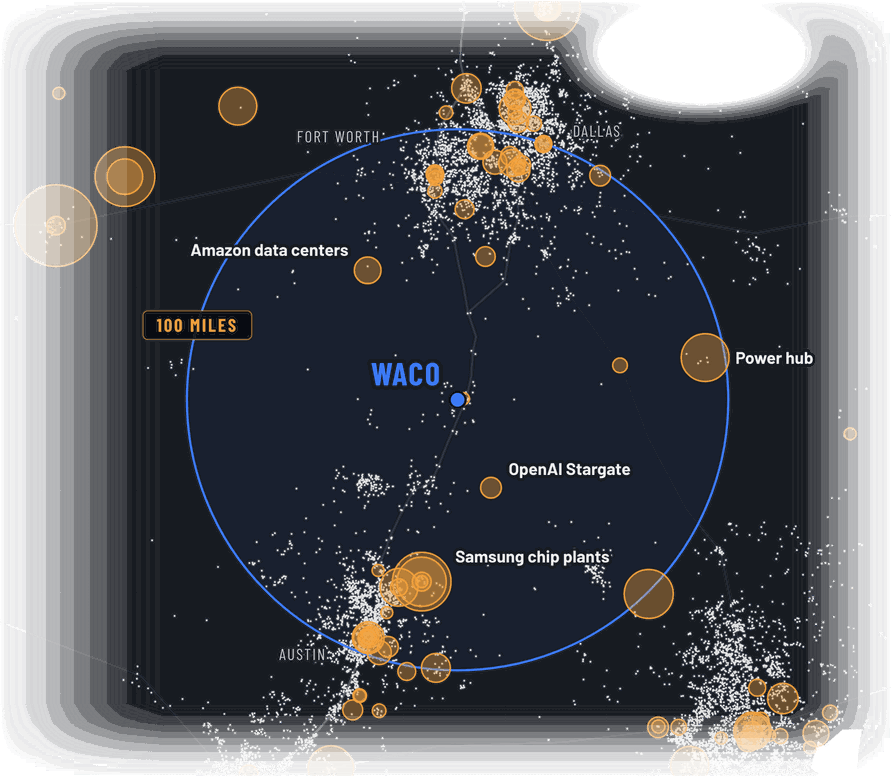
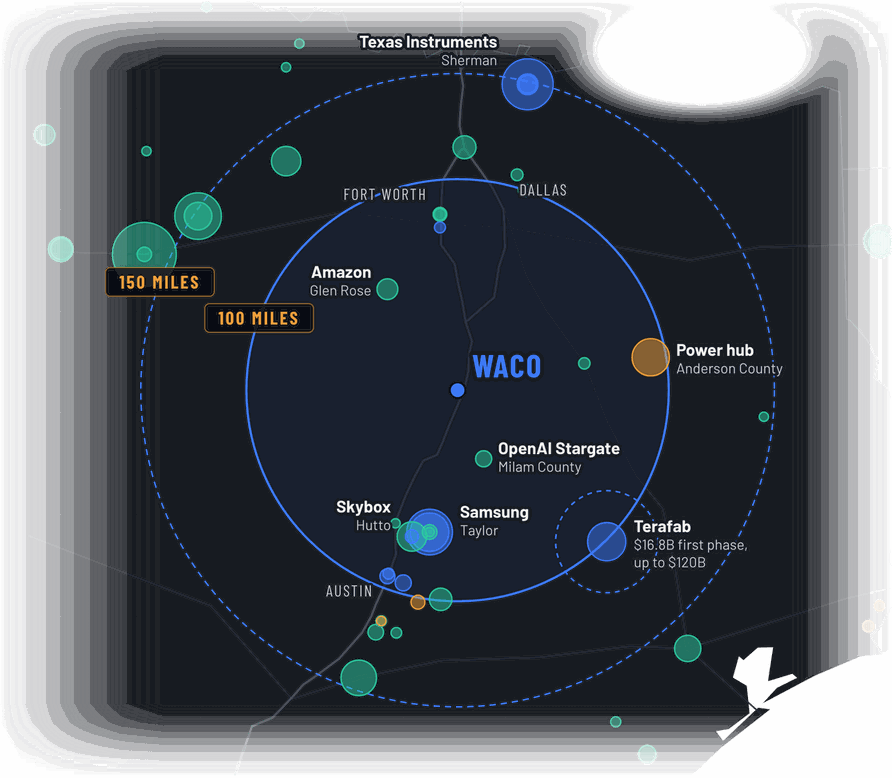
America’s two hottest big metros are 90 miles away. Nine chip fab sites sit within 110.
01 / Reach
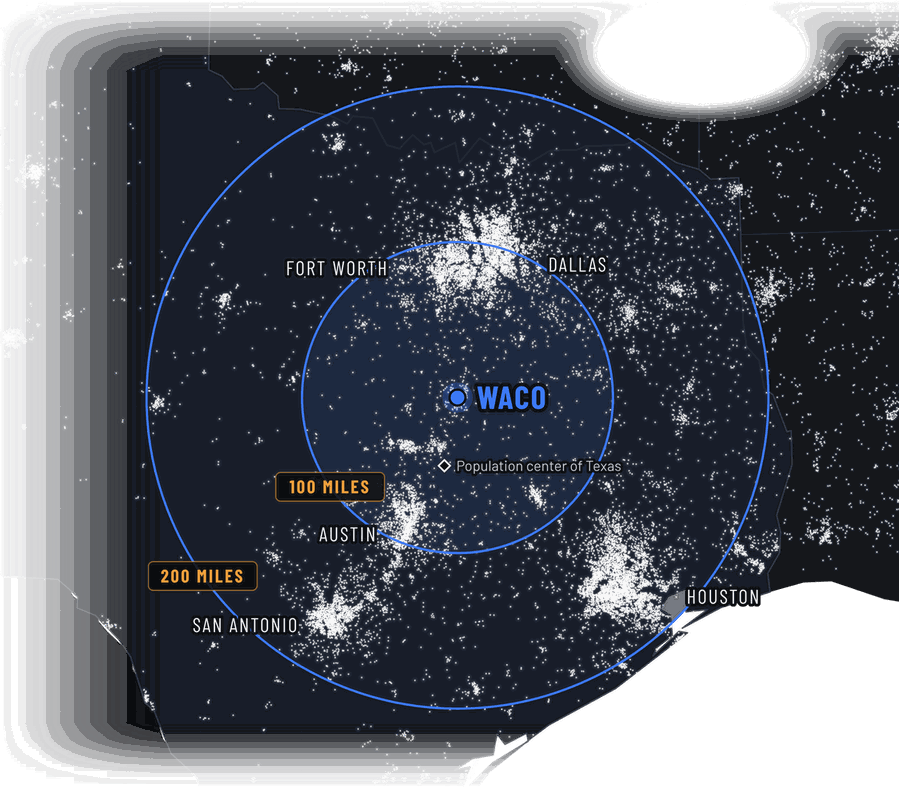
Waco sits on Interstate 35 at the center of the Texas Triangle, about 90 miles from both Dallas/Fort Worth and Austin. One location here serves most of the state.
The neighbors are the fastest growing big metros in the country. Dallas/Fort Worth added 810,000 residents from 2020 to 2025, the most of any U.S. metro. Austin grew 13.9 percent, the fastest of any metro of a million or more. Only 17 of 276 mid sized metros sit within 100 miles of two fast growing big metros, and Waco’s two added the most.
The circle around Waco holds the labor pool and the customer base of a large state. As a state it would rank 12th in population, with an economy about the size of Georgia’s.
engineering students within 100 miles, more than within 100 miles of San Jose, Atlanta or Chicago. Texas A&M, 81 miles away, enrolls more engineering students than any university in the country.
less for a home than in Austin. The median home is worth $267,000 in metro Waco, $459,900 in Austin and $392,000 in Dallas/Fort Worth.
major fab sites within 110 miles, including Samsung’s $37 billion Taylor plant, in production in 2027, and Terafab in Grimes County, with $16.8 billion in its first phase.
02 / National screen
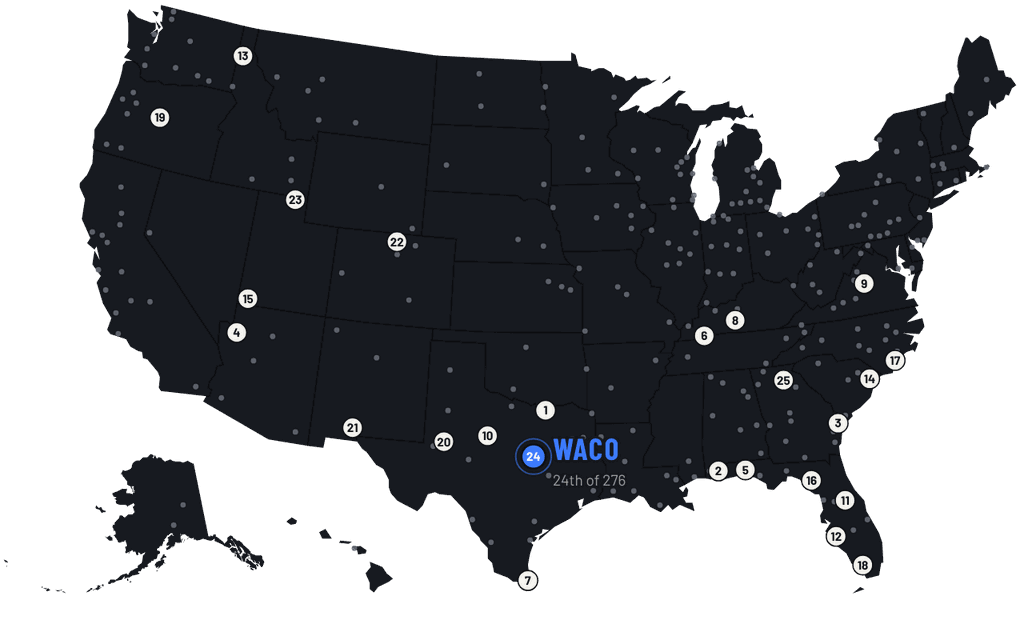
Ford Insight tested the Waco story against the rest of the country. The screen covers every U.S. metro with fewer than 500,000 residents, 276 in all, and the more than 900 projects of $1 billion or more logged across the United States since January 2021. Each metro is scored on six measures of growth. Waco ranks 24th, in the top 10 percent.
Twice the median on people. Three times on jobs. Waco beats the median metro on all six measures, which only 16 of the 276 do.
Jobs lead. Jobs grew 8.9 percent from 2019 to 2025, more than three times the 2.8 percent of the median metro. Population grew twice as fast as the median, and output grew 15.5 percent against 9.5 percent.
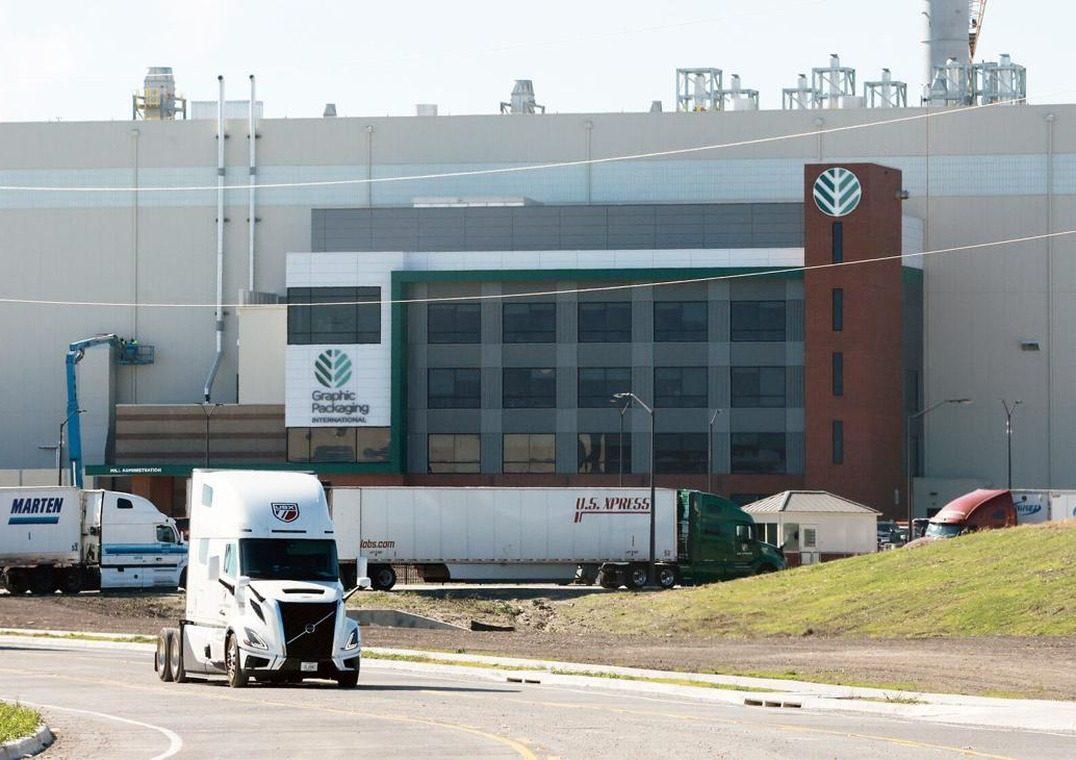
Large plants are rare. Fewer than one in three of these metros has landed a project of $1 billion or more since 2021. Only about 30 have landed a manufacturing plant of that size, counting chip and battery plants. Waco is one of them, with the Graphic Packaging mill.
Location shows up in the results. Only 17 of the 276 metros sit within 100 miles of two fast growing big metros. Nine of those 17 rank in the top 35 for growth.
The screen counts only the biggest projects. Waco’s seven other plants above $100 million do not register in it. The next section counts them.
03 / Capital turned first
In the 2000s a big deal in Waco was a $5 million to $10 million plant. Before 2017 the county had never landed an industrial project above $100 million. Since 2020 it has landed eight, along with seven more in housing, retail and civic projects. That inflection is behind us.
Announced industrial capital in McLennan County, running total since 2012. The last bar adds the $2.5 billion pipeline for 2027 to 2032 and does not count data centers. Source: Ford Insight project ledger.
Before 2017: zero. The industrial projects are process plants with long lives, not short term warehouse leases.
| Industrial | Announced | Investment |
|---|---|---|
| Graphic Packaging | 2023 | $1.67 billion |
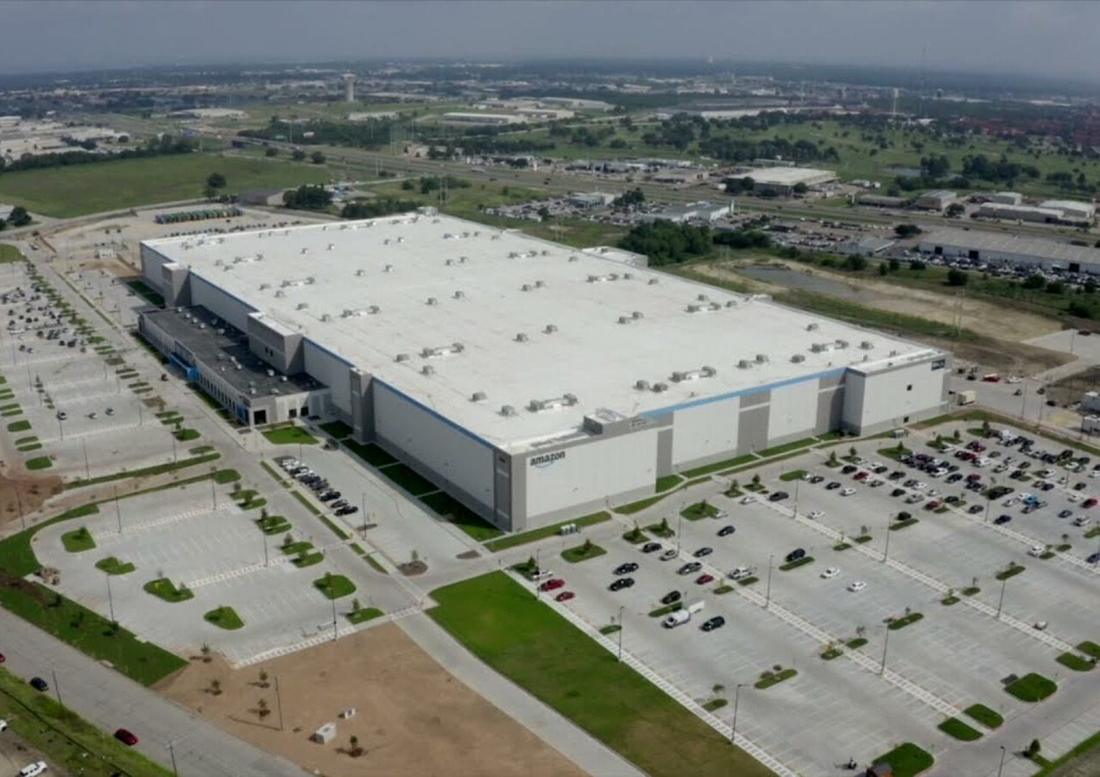
| Amazon | 2020 | $500 million+ |
| Electrolit | 2024 | $400 million |
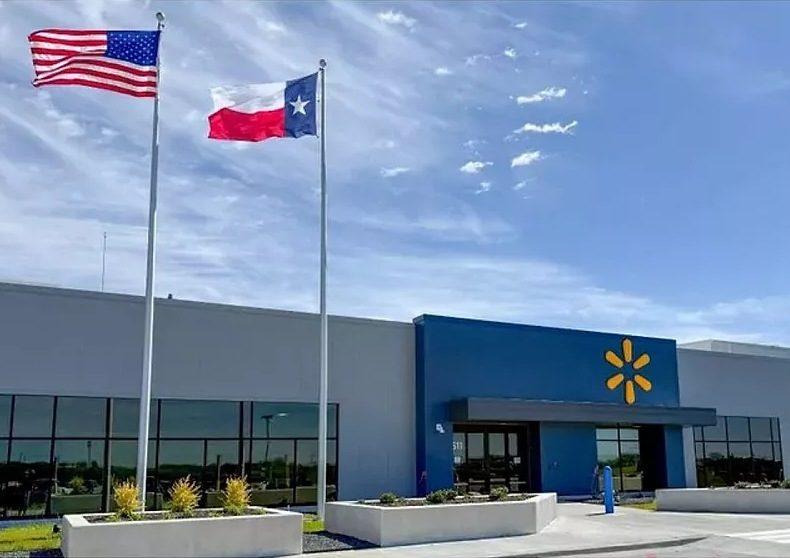
| Walmart dairy | 2024 | $350 million |
| Knauf Insulation | 2021 | $305 million |
| EFC Gases | 2024 | $210 million |
| BrightFarms | 2023 | $182 million |
| Envases | 2020 | $155 million |
Housing, retail and civic projects have followed the plants.
| Housing, retail and civic | Announced | Investment |
|---|---|---|
| Riverway residential | 2024 | $1.2 billion |
| Barron’s Branch District | 2026 | $900 million |
| Waco ISD school bond | 2021 | $355 million |
| Riverfront development | 2020 | $300 million |
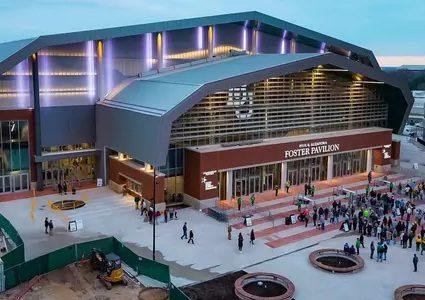
| Foster Pavilion | 2022 | $240 million |
| Cottonwood Creek Marketplace | 2020 | $145 million |
| Cordova Springs Village | 2023 | $125 million |


top taxpayers in McLennan County are new arrivals or recent expansions. They hold $2.57 billion of the top 20’s $3.53 billion of taxable value, or 73 percent.
projects from foreign companies since 2020, from six countries, with more than 800 jobs. German companies have announced about $700 million and Mexican companies about $680 million.
The first investment is rarely the last. Messer built a $50 million plant in 2022 and announced a $280 million complex in 2026. Envases followed a $227 million can plant with $55 million more. Tractor Supply has grown from 105,000 square feet in 2000 to more than 1 million.
04 / What comes next
Capital is spent once, to build. Jobs, output and housing demand come later, once a plant is running, and they recur every year. Graphic Packaging, the Walmart dairy, Electrolit, Fidelity Manufacturing and EFC Gases have only recently started production or are still being built.
Samsung’s $37 billion Taylor fab starts production for customers in 2027. Terafab, in Grimes County, starts at $16.8 billion with up to $120 billion at full buildout. About 125 supplier firms are still evaluating Central Texas, and the first wave has already landed in McLennan County.
The ingredients / Six things industry needs. Waco has all six.
Waco uses about one third of the water rights it holds and recently adopted a 100 year water strategy. The Lake Whitney reallocation could bring about 84,000 acre feet a year of new supply to the region by the early 2030s.
The Bell East to Watermill leg of the state’s new transmission backbone crosses the county, in service 2030 to 2032. 345kV lines already tie into the East Temple switch, and retired coal plants have freed up capacity.
Energy Transfer’s Ocean line links the Maypearl and Katy hubs through McLennan County. 16 Bcf a day of new pipeline capacity is coming out of the Permian between 2024 and 2030.
More than 14,000 acres sit in established industrial parks, and 21,150 more acres of potential industrial land sit under common ownership in McLennan and Falls counties. For comparison, AllianceTexas in north Fort Worth began with 13,000 acres.
Texas State Technical College keeps its headquarters and flagship campus in Waco: 2,900 students, 20 technical programs and 94 percent job placement. 946,000 people and a labor force of 479,000 live within 60 minutes, and 700 to 800 soldiers exit Fort Hood every month.
The City and the County split an $8 million a year deal closing fund 50/50, and have funded economic development jointly since 1997. $58 million in incentives to 77 projects has leveraged about $2 billion of private investment.
05 / Downtown
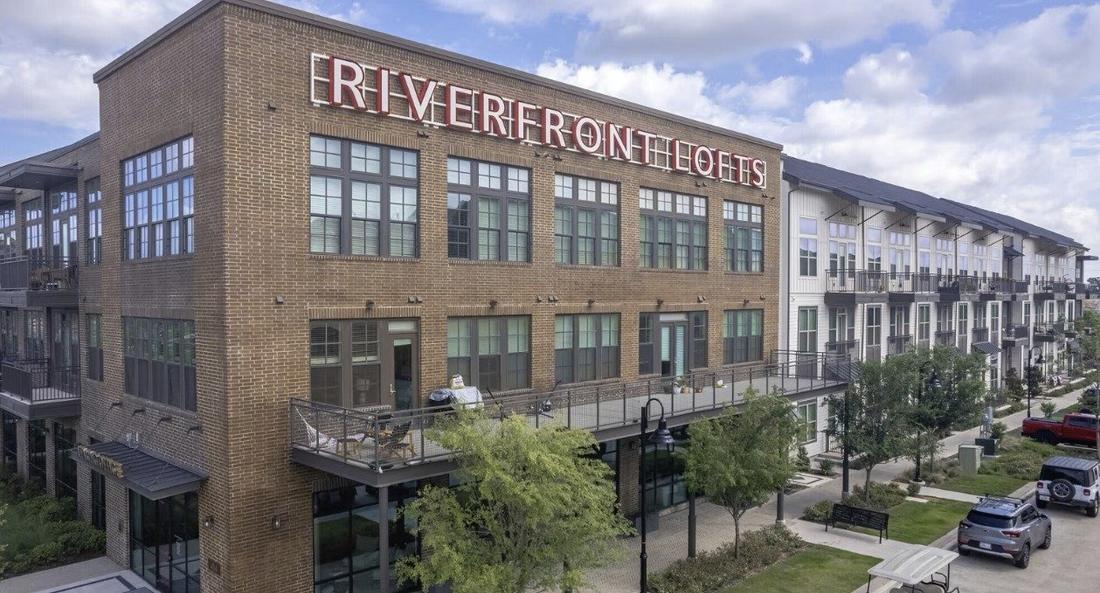
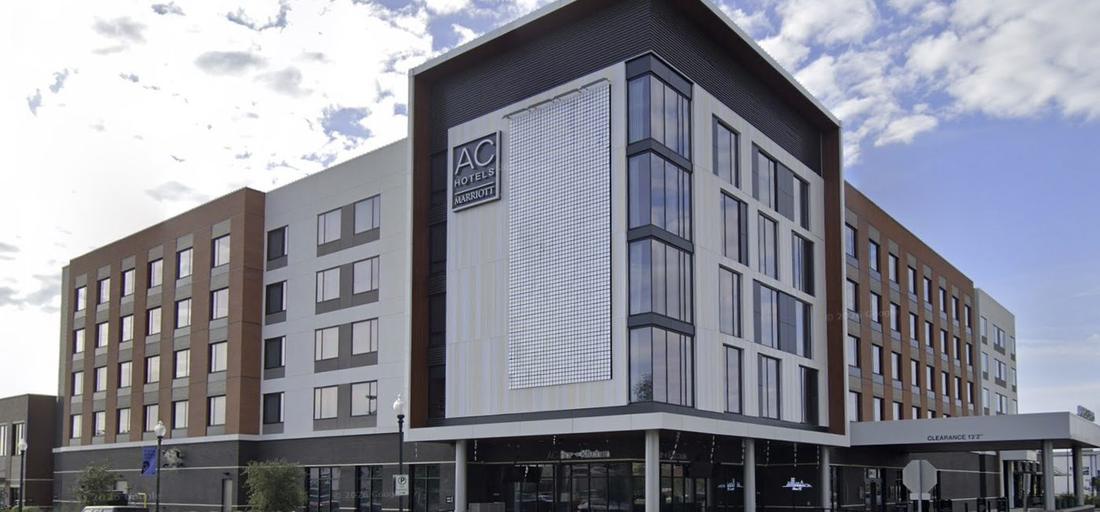
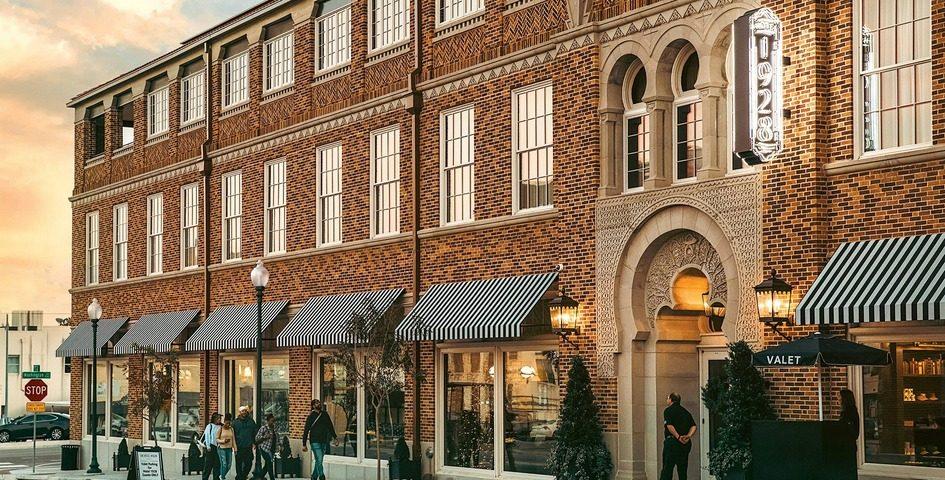
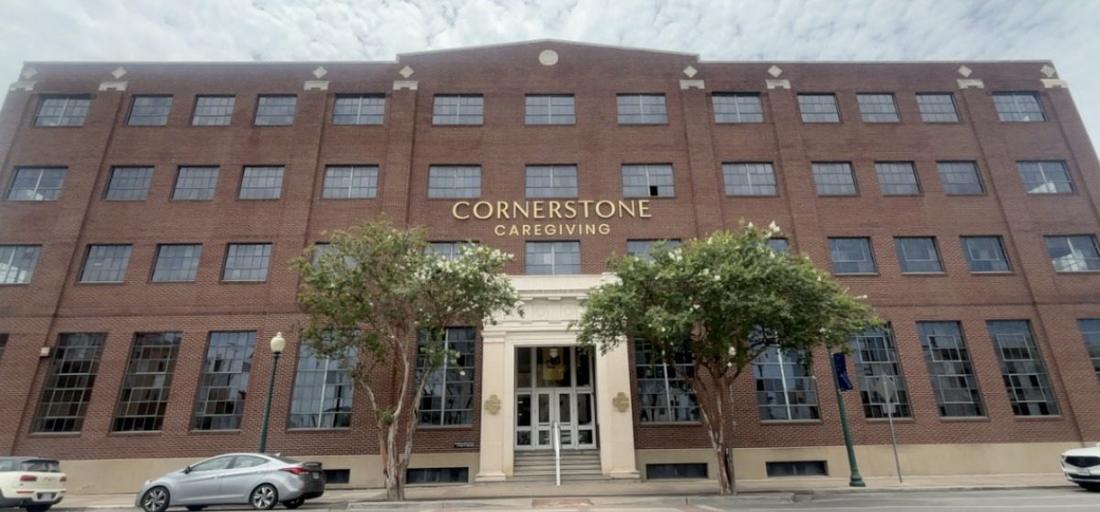
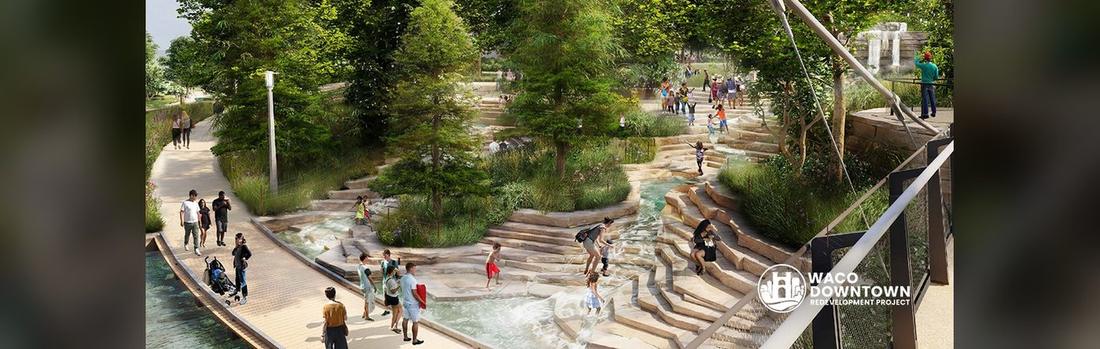
Five projects built and planned total $1.5 billion: Barron’s Branch, the riverfront, Foster Pavilion, the AC Hotel and the Cornerstone headquarters. Public investment is going in first, and the private market is already paying the top rents in the region to be here.


leased at Riverfront Lofts at the end of September 2026, at $2.26 to $2.58 a square foot against a pro forma of $1.70. Its one bedroom rents run about 20 percent above the newest suburban Class A property. The developer is adding about 125 more apartments and another parking garage.
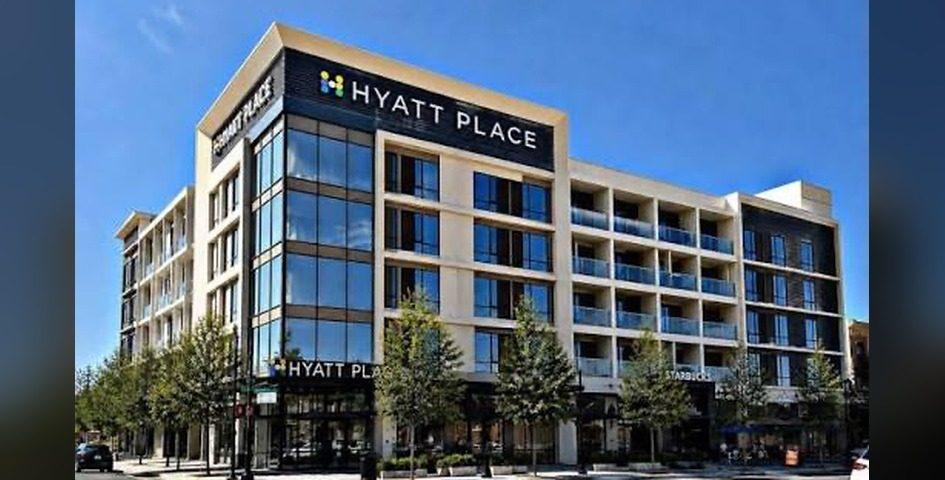
hotel rooms opened or under construction downtown since 2023. Hotel 1928, the AC Hotel by Marriott and Hotel Herringbone have all opened, three hotels opened on Martin Luther King Jr. Boulevard, and Hyatt Place opens in 2027.
office jobs in the downtown core today. Cornerstone Caregiving is turning the Insurors building into its headquarters with about 400 employees planned, and Magnolia has more than 250 in the former Tribune-Herald building.
committed to the Barron’s Branch District, due in 2029. The Riverwalk rebuild adds $26 million, the City put $65 million into Foster Pavilion, and $65 million is going into rebuilt streets around the riverfront.
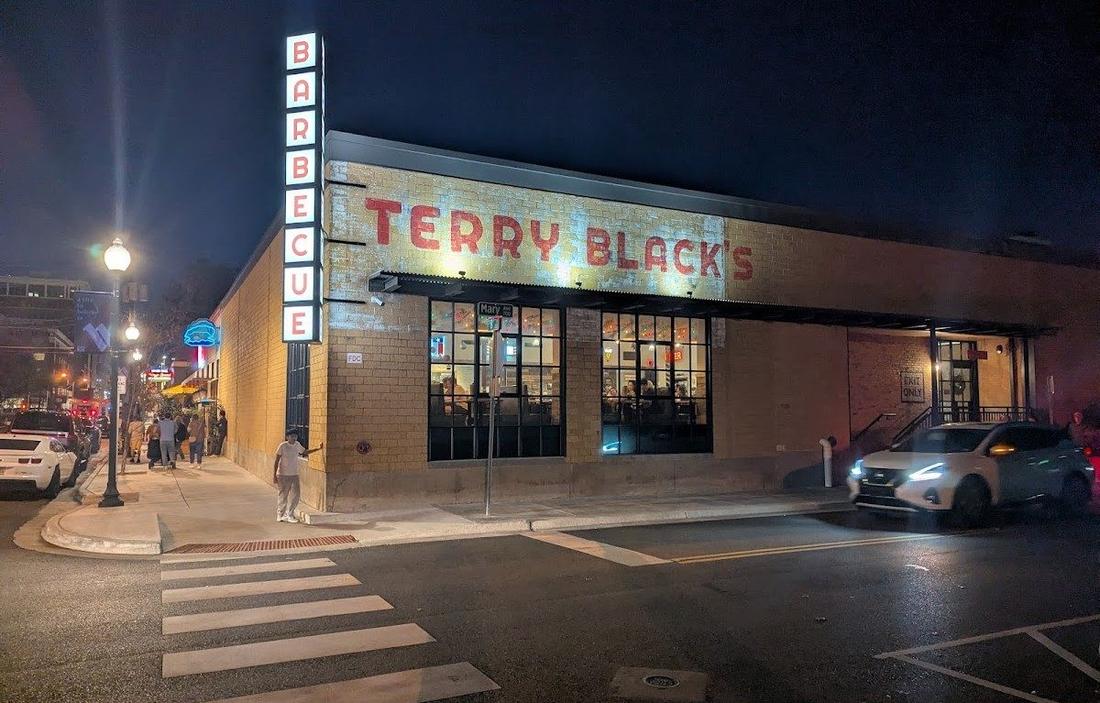
new restaurants and bars that read like a larger city: Terry Black’s Barbecue, Opal’s Oysters, Red Herring, the restaurant at Hotel 1928, Casa do Brasil, Barnett’s Whiskey House and a French patisserie that opened in 2026.
in assets at six banks that started in Waco and stayed, led by Extraco Banks at $2.57 billion. Local banks are a sign of local wealth and a source of local credit.
06 / The forecast
The Perryman Group base case takes the Waco metro economy from $15.1 billion in 2025 to $32.0 billion in 2050, adding 64,700 jobs and 96,500 residents. Ford Insight’s update does not replace the base case. It counts the plants that have opened since 2025 and the pipeline that is visible today, and it leaves out data centers.
Waco metro real gross product, billions of 2017 dollars. Source: The Perryman Group, May 2026; Ford Insight estimate. The base case values for 2040 and 2045 are a straight line between Perryman’s 2035 and 2050 figures. Excludes any impact from data centers.
| Billions of 2017 dollars | 2025 | 2035 | Growth | A year |
|---|---|---|---|---|
| Perryman base case | $15.1 | $20.6 | +$5.5 | $550 million |
| Ford Insight middle case | $15.1 | $22.6 | +$7.5 | $750 million |
| Ford Insight low to high | $15.1 | $21.7 to $23.5 | +$6.6 to +$8.4 | $660 to $840 million |
One caution on comparing these figures with the capital totals above. The $4.17 billion is money spent once to build plants. The forecast measures output, which is what the economy produces every year. The two move together, with a lag of a few years.
In the first five years alone: about 8,000 homes, 984,000 square feet of office, 549,000 square feet of retail and 161,000 square feet of restaurant space across the metro.
Growth of this kind shows up downtown as demand for homes, hotel rooms, offices and restaurants. The next three to five years are the window to be early downtown.
Summary / The memo on one screen
Mid sized regions have generally struggled to grow. A Brookings study found that job growth in metro areas of 250,000 to 1 million residents lagged large metros by almost 4 percentage points in the 2010s. Waco broke that pattern. Since 2009 its output, wages and jobs have each grown faster than the nation and its Texas peers, and a national screen of 276 metros puts it in the top 10 percent for growth.
A big deal in Waco in the 2000s was a $5 million to $10 million plant. Today it is $1 billion or more. Announced industrial capital went from $191 million in 2012 to 2019 to $4.17 billion in 2020 to 2026, about 22 times as much. Fifteen projects above $100 million have been announced since 2020. Fourteen of the county’s 20 largest taxpayers are new arrivals or recent expansions.
The Greater Waco Chamber pipeline shows 161 inquiries and 10 shortlisted projects, with $1.35 billion of capital and 2,650 jobs. Recent company site visits bring the projection to $2.5 billion for 2027 to 2032, before counting any data centers. Deals that have not surfaced yet would be on top of it.
Water, power, natural gas, land, workforce and a supportive government. Waco uses about one third of its water rights, the 765kV backbone will cross the county by 2032, more than 35,000 acres of industrial land are in parks or under common ownership, Texas State Technical College is headquartered here, and the City and County fund a deal closing fund 50/50 every year.
Five projects built and planned total $1.5 billion. More than 725 hotel rooms have opened or started construction since 2023, the core holds about 2,800 office jobs, and Riverfront Lofts is 100 percent leased at $2.26 to $2.58 a square foot, 33 to 52 percent above its pro forma.
82 percent of Texans live within 200 miles. 9.1 million people and an $876 billion economy sit within 100 miles, with 394,000 college students. America’s two hottest big metros are 90 miles away, and nine chip fab sites sit within 110.
Capital turned first. Before 2017 the county had never landed an industrial project above $100 million. Since 2020 it has landed eight, and the capital is already on the tax roll. That inflection is behind us.
The economy turns next. Plants that opened in 2025 or later carry about 2,686 announced direct jobs, and the Chamber shortlist carries 2,650 more. Against that total of 5,336, the base case adds 612 production workers from 2025 to 2030. The difference is growth that is already coming and not yet priced in.
The Perryman base case takes the Waco economy from $15.1 billion to $20.6 billion by 2035, about $550 million a year. Counting the new plants and the visible pipeline, Ford Insight’s middle case reaches $22.6 billion, about $750 million a year, and carries about 12,800 more jobs, 19,200 more residents and 7,600 more homes by 2035 than the base case.
Growth of this kind shows up downtown as demand for homes, hotel rooms, offices and restaurants. The capital has arrived. The jobs and residents are arriving now. The next three to five years are the window to be early downtown.
The investor deck (76 slides) and the memo (7 pages) go out by email as PDFs. Send your name and company to the address below and Ford Insight will reply with both.
Or call 817-909-9894. Please say which project or fund you are looking at so the reply can be specific.
Contact
Ford Insight is a development services advisory and economic strategy firm. Bradley led Waco through the period described on this page and supported more than $20 billion of private investment over a 22 year career in local government. He now advises developers, family offices, industrial clients and public entities on site selection, incentives and public private partnerships.